Max Krajewski
geb. – gest.
Photographs of the buildings will follow at the beginning of 2025
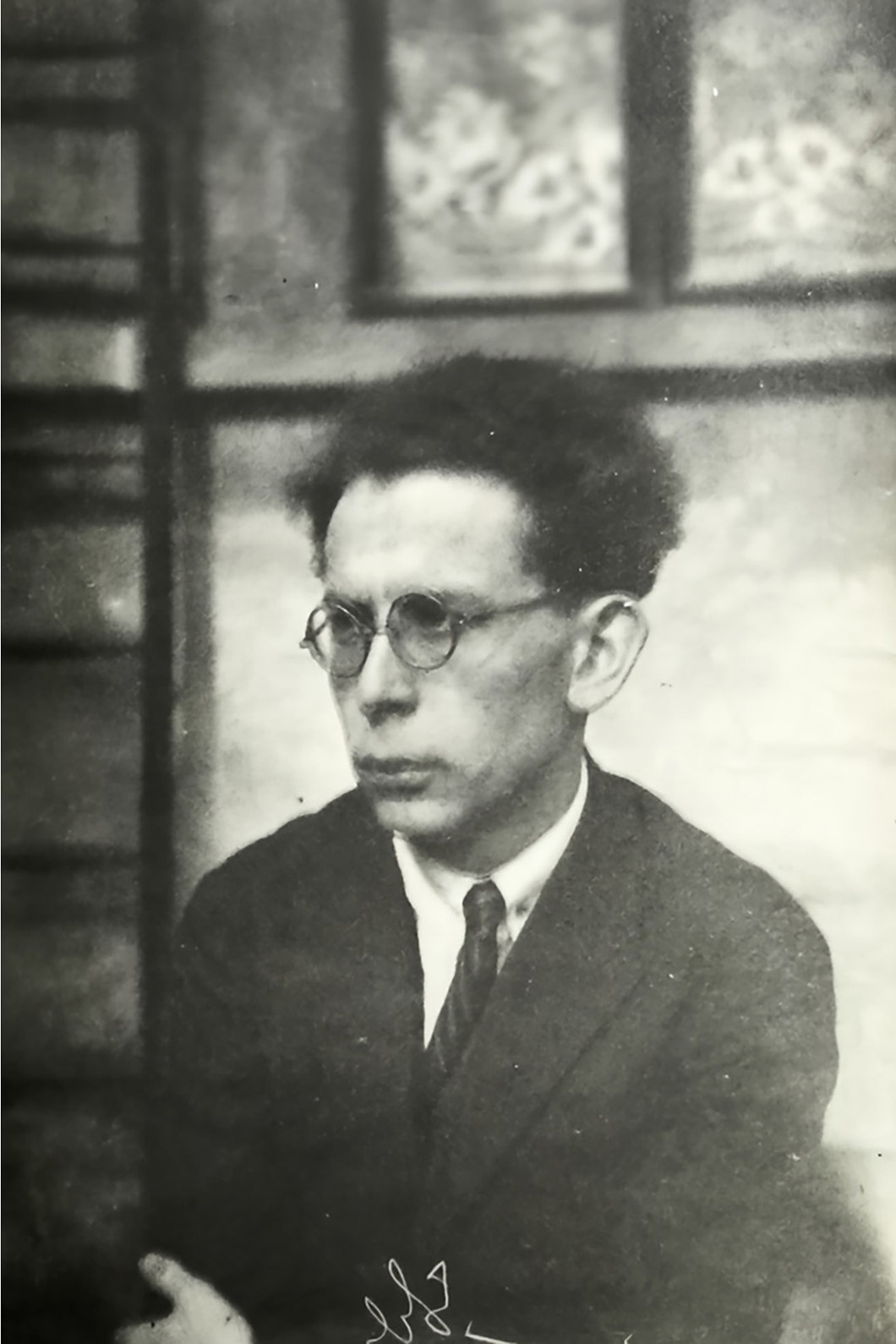
Max Krajewski studied at the Bauhaus in Weimar and Dessau from 1923 to 1927 and then worked as an architect in Walter Gropius’ studio until 1930. There he was involved in the construction of the Törten housing estate in Dessau and was responsible for the construction of the employment office in Dessau and the Dammerstock housing estate in Karlsruhe as the local site manager. In 1931, in the face of the economic crisis and growing anti-Semitism, he went to the Soviet Union. In the early years, he worked at the Giprogor State Urban Planning Institute, where he designed various housing projects throughout the USSR and took part in numerous competitions, including for the workers’ palace in Makhachkala, the hotel in Moscow, the workers’ apartment building in Gorky, the apartment block in Czelabinsk and the residential quarter in Moscow. There he also met his wife and co-author of most of his projects, Fanny Belostozkaja, a student of Malevich and El Lissitzky. Together they designed two pavilions for the All-Union Agricultural Exhibition (today’s WDNCh in Moscow), one of which, the MOPR pavilion, still stands today after numerous conversions. Unlike many other Bauhaus students in the Soviet Union, Krajewski survived the Stalinist purges. During the war, he and his family were evacuated from Moscow to Busuluk in central Russia. After the war, he worked on a prestigious skyscraper project in Moscow, which was never realized. From the 1950s onwards, he was responsible for redesigning the exhibition spaces and developing a special exhibition system for the Museum of the Russian Revolution in Moscow. He worked there until his retirement. Krajewski died in Moscow in 1971. His two daughters still live today, one in Moscow, the other in Hamburg.